
Quick Overview
Artificial Intelligence (AI) is the simulation of human intelligence in machines, enabling them to learn, adapt, and perform tasks that usually require human thinking. It is transforming industries by improving efficiency, decision-making, and innovation.
This blog will walk you through:
✅ AI in healthcare improves early diagnosis, personalised treatment, and hospital efficiency
✅ AI in finance boosts fraud detection, risk management, and customer service
✅ AI in retail personalises shopping, automates support, and optimises supply chains
✅ AI in manufacturing enables predictive maintenance, quality control, and faster product innovation
✅ AI in transportation and logistics powers autonomous vehicles, route optimisation, and real-time tracking
✅ AI in education supports personalised learning, automated grading, and intelligent tutoring
✅ AI in agriculture drives precision farming, crop monitoring, and sustainable resource management
✅ AI in entertainment enhances content recommendations, media creation, and immersive experiences
Impact of AI is changing the industries, the way we use and interact with digitally driven tools. It’s a rapidly growing branch of computer science that has fast become an essential part of modern technology. Its applications are transforming the way we do business across industries, making us more productive and boosting innovation. This guide will detail how impact of AI is transforming industries and the workplace of tomorrow.
Impact of AI on Healthcare
Revolutionising Diagnosis and Treatment
Artificial Intelligence (AI) is transforming healthcare, enabling diagnosis and treatment in ways that were previously not possible. One of the most notable innovations is the application of AI in medical imaging and diagnostics. AI algorithms are becoming increasingly adept at processing medical images and detecting abnormalities with unprecedented accuracy. For example, AI systems can identify early signs of cancer, heart and neurological conditions with greater precision than human radiologists.
Predictive analytics is another area in which AI is making an impact. AI can analyse massive amounts of patient data to predict the likelihood of patient outcomes, identify those at risk of developing certain conditions, and offer preventive interventions. Doing so not only improves patient health but can also reduce healthcare costs by preventing serious illnesses before they need expensive treatment.
Another is personalised medicine. If you have cancer or another disease in need of treatment, chances are you’ll be given a drug based on a one-size-fits-all approach. But what if the treatment was tailored to your DNA, your lifestyle, where you live, or other characteristics? Such personalisation is not only more effective but also safer because it reduces the likelihood that you’ll experience side effects. This will lead to more satisfied patients – and better outcomes.

Enhancing Operational Efficiency
AI is improving operational efficiencies in hospital settings beyond clinical applications, too. AI-powered hospital management systems facilitate administrative tasks such as scheduling, billing and inventory management. Because these systems reduce administrative burdens on healthcare professionals, they allow personnel to spend more time with patients.
The use of AI chatbots is improving patient care by providing an immediate response to common enquiries, arranging appointments, and even giving medical advice. This service is available 24 hours a day, so patients can receive support outside normal working hours. As a result, patients’ satisfaction will increase, and the pressure on staff will be reduced.
In summary, AI has the potential to revolutionise healthcare by improving diagnosis, treating patients more individually, and improving hospital operational processes. AI will evolve and have an even greater impact on healthcare in the future. Patients can expect to receive better and more timely care with AI in the coming years.
Take Our “Machine Learning Certification” Course: Your Gateway to the World of Data Science and Artificial Intelligence!
Finance
Transforming Financial Services
Artificial intelligence (AI) is rapidly disrupting the finance sector, with some of its most important applications being in the area of fraud detection and prevention. AI systems can analyse transaction patterns and spot anomalies indicative of fraudulent activity much more accurately and in real-time than human operators and other traditional rule-based systems. These systems are capable of learning and, therefore, unlike other rule-based systems, can adapt to new fraud patterns and thus improve their performance over time. This approach can not only provide customers with enhanced protection but also allows for savings for financial institutions.
A related area where impact of AI is rapidly transforming the state of the art is algorithmic trading. AI algorithms can process market data at speeds that far exceed anything that a human trader can do. These approaches allow trading systems to make decisions and execute trades based on complex strategies that draw on many data points. Human traders will only come close to analysing some of these factors. They can’t react as fast as AI-driven trading systems that can make trades in milliseconds. Firms that use sophisticated AI-driven trading systems are able to outperform those that don’t.
Personalised banking and customer service have also experienced a change thanks to the impact of AI. Banks are using AI to analyse customers’ data in order to provide tailored financial advice, products, and services, as well as answer customer queries, process transactions, and even offer some financial planning tips in the form of chatbots and virtual assistants. This personalisation helps increase customer satisfaction and customer loyalty, as well as boosting revenue for the banks.
Enrol our Python Basics Course from Jobsland.
Risk Management and Compliance
Risk management and compliance are two of the most important areas in which AI is contributing to the financial industry. AI helps to assess and measure risks using data derived from various sources, such as economic indicators and market trends, in addition to data collected from customers.
One is simply staying compliant with regulatory requirements. The world of finance is hugely regulated, and it’s a constant scramble to keep up with the shifting regulations and make sure that you’re doing everything right. Many regulatory requirements are very complicated, and decisions about thousands of transactions and activities are made a day. Here, AI can help you stay compliant by monitoring the transactions and activities in real time and flagging those that are going against the regulations.
Second, AI is automating auditing itself. Standard audits are often expensive and time-consuming, and they’re generally conducted only after a crime has already been committed. But because AI can analyse huge troves of financial data rapidly and accurately, it can uncover mismatches and inconsistencies that human accountants might miss. As a result, audits will be more precise and, more importantly, more preventive. They’ll stop wrongdoing before it happens rather than after, saving a lot of time and money. In both these cases, AI is enabling greater social cohesion. In the case of labour law, by helping employers identify and protect vulnerable workers, AI will reduce potential resentment and, ultimately, dissent. In the case of auditing, by helping to eliminate embezzlement and fraud, AI will reduce the sense that powerful actors are gaming the system – something that has become all too prevalent in the US. Not all AI applications will be so socially beneficial.
Retail
Revolutionizing Customer Experience
Thanks to the integration of AI technologies, the retail industry is also undergoing major changes. AI technologies are majorly affecting customer experience by analysing customer information and understanding their preferences and behaviors. Retailers are using AI to recommend products based on the preferences of the customers, which, in turn, provides customers with a highly personalised shopping experience and enhances shopping satisfaction.
For example, online retailers are using AI algorithms to provide customers with recommendations based on their past purchases and product-browsing history. This not only increases sales but also keeps online customers loyal to the company.
According to an article on the topic by Tom Gara in the publication Quartz in 2016, the new generation of software based on ‘machine learning’ is changing the rules of the game for customer service by answering customers’ questions on the spot. These automated services – called ‘chatbots’ – can do a wide range of things, including answering questions about the company’s products, processing returns, tracking orders and more. Chatbots can work 24/7 and help customers at any time, which improves customer satisfaction and takes some of the load of human employees engaged in customer service.
Predictive analytics for inventory management is another important use of AI in retail. AI systems use sales data, market trends, and seasonal developments to predict demand for produce in the future. This enables stock levels to be adjusted accordingly, lowering the risk of stockouts or overstock situations. By using AI to predict demand better, retailers can ensure that their assortment is well-balanced and meets customer expectations at the right time, ultimately boosting satisfaction and increasing operational efficiency.

Optimising Supply Chain
Another area where impact of AI is being leveraged in the retail industry is in optimising supply chains. Predicting demand and optimising supply chains are key to maintaining efficient operations and meeting customer expectations. AI systems process large amounts of data to help predict demand and optimise supply chains, from procurement of raw materials to delivery of the final product.
There are many examples of autonomous delivery systems and logistics. We are seeing more and more products delivered by drones and autonomous vehicles, which is helping to reduce delivery times and costs. Artificial intelligence is the driving force behind the development of autonomous delivery systems, with AI algorithms that plan delivery routes and delivery times to optimise products’ reaching customers as quickly as possible.
Improving warehouse operations is another area where AI can have a huge impact. AI-powered robots and systems are being used to automate much of the work that goes into picking, packing and shipping orders, improving efficiency and accuracy. This, in turn, reduces the amount of time and cost associated with warehouses and makes them much better able to fill orders. It also helps to manage inventory levels, optimise storage space, and ensure that warehouses are running at full capacity.
Manufacturing
Enhancing Production Processes
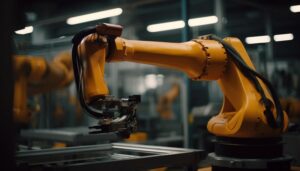
In manufacturing, AI is finding applications to optimise production processes and improve productivity. Predictive maintenance is one of the most important application areas of AI in manufacturing. AI systems continuously monitor machinery and equipment in real time and predict the timing of maintenance before equipment breakdowns occur to avoid them. As a result, downtime is reduced, and maintenance costs are cut, enabling smooth operation of production lines.
Quality control and defect detection play vital roles in product manufacturing. AI is helping manufacturers be more efficient and accurate in these processes. AI-powered vision systems and sensors can inspect products for defects so that only high-quality products end up in the market. This not only increases product quality but also reduces the cost of rework and waste in the process.
AI is also improving production lines and workflows by looking for bottlenecks and inefficiencies in production processes. It captures and analyses data from real-world phenomena, including sensors, machines, and operators. AI algorithms can help diagnose issues in production processes and suggest how to optimise the workflow, leading to faster production times and increased productivity.
Innovation in Product Design
Product design is also benefiting from AI’s innovation abilities. AI-driven design and prototyping are now possible, with AI algorithms providing insights and suggestions on new products that could work based on customer preferences, market trends, and historical data.
With increasing importance placed on customisation and personalisation of products, AI’s ability to do so at scale becomes an emerging advantage. This has led to a recent trend of personalised products being made available for customers. By analysing customer data, AI systems can produce products that match individual choices, right down to personalised clothing and custom-designed consumer electronics. This enhances customer satisfaction and loyalty.
One key advantage of AI-assisted manufacturing is its ability to speed up time to market. In advanced AI systems, the product lifecycle is streamlined by automating various steps of the process, including design, prototyping, and testing, before the actual production of goods takes place. This helps to reduce both the time and cost associated with launching new products and puts manufacturers in a leading position for the commercialisation of their goods.
Transportation and Logistics
Revolutionizing Mobility
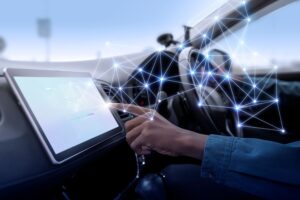
AI is disrupting mobility by providing the means to create autonomous vehicles and AI-powered mobility systems. Self-driving cars, trucks, delivery drones, and other autonomous mobility systems use AI algorithms to make decisions in real-time while on the move, thereby increasing safety and efficiency.
A related application is improving traffic management and route optimisation. AI systems can analyse traffic data and patterns to optimise traffic flow, reduce congestion, improve travel times, and reduce fuel consumption, which benefits commuters and the environment.
Moreover, AI helps in fleet management and logistics planning by analysing data from vehicles and logistics operations to optimise the route, schedule, loads, and other factors so that fleets operate optimally, reducing costs and improving service levels.
Improving Safety and Efficiency
By leveraging AI, transportation is being made safer and more efficient. Predictive maintenance systems track vehicles and equipment in real-time, anticipating when maintenance is required to prevent breakdowns. This reduces downtime and expense of maintenance, ensuring that transportation operations continue to be efficient.
Shipment tracking and control involves the real-time monitoring of deliveries in order to provide required visibility into the location and status of goods through the shipping process. AI systems track shipments in real time. By tracking the location of goods, logistics service providers are able to identify and pre-emptively address any possible issues that may affect the delivery process, such as traffic jams or bad weather, and adjust their actions accordingly.
Another area of improvement is passenger safety and comfort. AI can help improve safety and comfort for passengers by monitoring and learning from on-vehicle and infrastructure data. Examples of these improvements include collision avoidance systems, adaptive cruise control and personalising the in-vehicle experience.
Education
Transforming Learning Experiences
Thanks to AI, the education sector is undergoing a virtual overhaul. Personalised learning with artificial intelligence is becoming especially prevalent, where AI algorithms track student learning behaviour, strengths, and weaknesses, and deliver relevant learning content. Not only this, but AI is also helping many students learn at their own pace, which helps them absorb the material more effectively.
The use of intelligent tutoring systems and virtual assistants is becoming common in teaching. With these AI-powered tools, students can learn while receiving assistance in real time, getting answers to their questions, and using helpful resources. Virtual assistants can also aid teachers with tasks such as scheduling and reminders to help them focus more on teaching.
AI-generated textbooks, interactive learning modules, and personalised curricula adapt to the latest educational standards and each student’s needs. Since AI can write, curate, and publish educational material in a fraction of the time that a human teacher would take, it saves educators hours of work.
Administrative Efficiency
AI is automating many administrative tasks in educational institutions, increasing their efficiency. Teachers and administrative staff can automate a lot of work, such as grading, tracking attendance, and other administrative forms, which can make these things easier and faster to process.
A second important application of AI in education is predictive analytics for student performance: using historical data and current performance metrics to predict students’ future performance, identify those who have a higher risk of underperformance, and recommend – ideally, proactively – the appropriate interventions to help them get back on track to learning. This is an excellent example of applying AI to tackle educational challenges before they become serious problems.
AI is also being deployed to improve recruitment and enrolment procedures. For instance, systems might use application data to predict student success and streamline enrolment, ensuring that institutions recruit the best-fit applicants and admit a more academically successful student population.
Agriculture
Precision Farming
The agricultural sector is also going to be highly affected by AI in the form of precision farming. Crop monitoring and disease detection are where AI is being applied in agriculture today. Sensors, drones, and satellite imagery are being used to collect data on the health of crops, soil conditions and pest activity. AI can then be used to analyse all this data and relay it back to farmers in real-time, helping them to make better decisions about crop management.
Better irrigating and fertilising with AI saves resources and improves yields. Artificial intelligence (AI) systems can monitor soil moisture, weather, and plant growth stages to optimise irrigation and fertiliser schedules. By enhancing precision in managing water and nutrient resources, we can avoid over- or under-irrigating and fertilising. This not only reduces waste but also improves productivity.
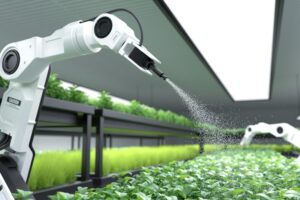
Increasingly, we also see autonomous farming equipment and machinery operating on farms. AI-guided self-driving tractors and robotic harvesters can plant, weed, and harvest fields more precisely and productively than humans, cutting costs and improving the consistency and quality of all farm operations.
Enhancing Sustainability
AI also supports the sustainable use of natural resources in agriculture through resource management and conservation. AI systems can automate the use of water, fertilisers, and pesticides efficiently, reducing the environmental impact and conserving natural resources. Thus, AI helps develop a sustainable and environmentally friendly approach to farming that is also economically viable.
Productive waste and yield improvement are the other two vital benefits. AI can take data from different sources, identify inefficiencies in the supply chain, and suggest actions to address them. This will help reduce post-harvest losses, enable more food to reach consumers, and increase the yield of agricultural operations.
Predictive climate analysis is important for farming as it can help in predicting the advancement of crops. Advanced AI can detect climate and weather patterns and forecast climatic changes days in advance, giving farmers a chance to prepare against its adverse effects. For example, suppose there is a prediction of heavy rainfall in a certain region. In that case, farmers in those areas can use appropriate equipment to safeguard their land and crops. Similarly, they can schedule planting and harvesting accordingly. By deploying AI for such climate management, farming practices are made more resilient and adaptive to changing climate conditions.
Entertainment
Revolutionizing Content Creation
Content production in entertainment is being revolutionised through the impact of AI. Algorithms in music and video production are being used to compose new music, generate video content, and edit media. The aim is to analyse patterns and trends in existing content to create new content that is engaging and resonates with audiences. This allows the creators to produce content more effectively and efficiently.
Content recommendations are one of the main applications of AI in entertainment. For example, Netflix and Spotify now use AI algorithms to analyse a user’s preferences and viewing/listening habits and to recommend content that matches their taste. This personalised approach enhances user engagement and satisfaction.
We are just starting to see how developing AI can improve gaming experiences. Through AI technology, we can make the NPCs smarter, generate game levels in real-time, and personalise gaming experiences based on players’ specific preferences. Moreover, the use of AI can help analyse players’ behavioural patterns to predict the optimal difficulty level to provide each player. This will not only make the game more realistic and fun but also help reduce boredom and increase the engagement between the player and the game.

Improving Audience Engagement
AI marketing and audience targeting are useful in improving marketing and advertising effectiveness towards the audience. AI systems can be used to analyse the data from social media, online behaviour and demographics. The information collected from these AI systems can be used to target marketing to the right people at the right time through various platforms. This will improve the effectiveness of marketing campaigns and improve engagement rates by targeting the audience with the right marketing content.
AI also aids real-time analytics on content performance. It analyses viewership, engagement, and other response metrics for movies, TV shows, music, and games. The data on content performance can be utilised by content creators and marketers to make informed decisions about making the content more engaging and fulfilling for the audience.
Boosting the user experience with AI means designing experiences for audiences that are more interactive, personalised and immersive. AI-driven chatbots, VR (virtual reality) and AR (augmented reality) technologies are being deployed to create new immersive experiences in entertainment that are more effective (engaging the human brain at a deeper level of engagement). They offer new modalities for audiences to interact with entertainment, which makes it more fun and enjoyable.
Conclusion
Impact of AI is reshaping healthcare, finance, banking, retail, manufacturing, transportation, education, agriculture, entertainment, and more. Its potential to improve efficiency, decision-making, customer experience, and operational processes is limitless. There is simply no way to innovate and grow without it. Impact of AI will continue to reshape the future of these industries, bringing new capabilities and opportunities to accelerate innovation.